
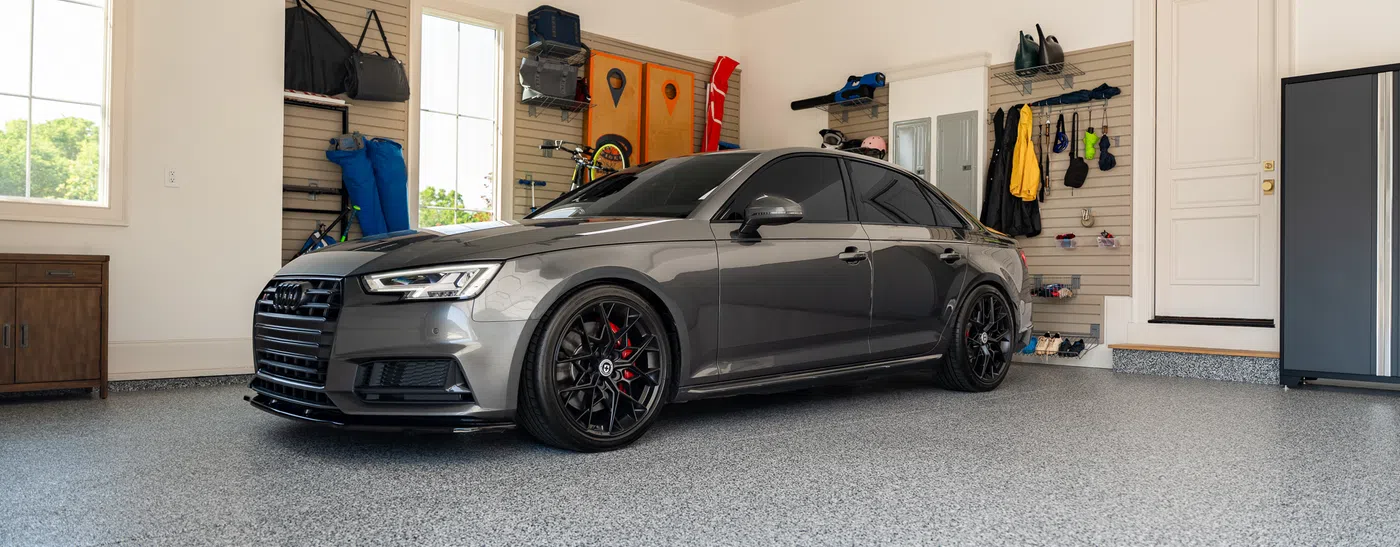
Why Lifetime Warranty Garage Floors Are Worth Understanding Before You Buy

Lifetime warranty garage floors sound like a simple promise — but the details behind that promise vary widely from one company to the next.
Here's what you need to know quickly:
- A lifetime warranty on an epoxy garage floor typically covers peeling, delamination, and adhesion failure for as long as you own the home
- Most warranties are tied to the original homeowner only — though some are transferable to a new buyer
- Common exclusions include moisture vapor above industry thresholds, battery acid, brake fluid, and cracking in the underlying concrete
- Proper concrete preparation is usually required for the warranty to remain valid
- The coating system matters — a professional two-day epoxy and polyaspartic system (where epoxy is the primary 'hero' product and polyaspartic is strictly a topcoat working in tandem) outperforms single-day alternatives in long-term durability
- Company longevity is critical: a warranty is only as good as the business still standing behind it
If you're an Atlanta homeowner dealing with a stained, peeling garage floor, you've probably seen the word "lifetime" used freely in contractor ads. But not all lifetime warranties are built the same. Some cover almost everything. Others are riddled with fine print that makes real claims nearly impossible.
The honest truth? A lifetime warranty only protects you when the coating system, the installation process, and the company behind it are all solid.
This article breaks down exactly what to look for — and what to watch out for.

Demystifying the Lifetime Warranty Garage Floors Guarantee for Epoxy Systems
When you begin researching flooring upgrades, the phrase "lifetime warranty garage floors" pops up everywhere. It sounds incredibly reassuring. After all, who wouldn't want a floor guaranteed to look spectacular and perform flawlessly forever? However, as seasoned professionals who have restored over 25,000 garages and installed more than 15,000,000 square feet of premium flooring across the country, we believe in complete transparency. To truly protect your investment, you must understand what "lifetime" means in the context of industrial-grade polymer coatings.
In the concrete coating industry, a lifetime warranty is fundamentally an adhesion warranty. Adhesion refers to how successfully the epoxy basecoat molecularly fuses with your concrete slab. When a professional team applies a high-solids epoxy system to a properly prepared concrete surface, that bond should be permanent. If the coating lifts, bubbles, or peels away under normal residential use, that is considered an adhesion failure.
A genuine lifetime protection plan guarantees that the system will not delaminate or peel from the concrete substrate. However, the lifespan of the warranty is almost always defined by the period during which the original purchaser owns the home. To see how we structure our commitment to your peace of mind, you can review the Granite Garage Floors Lifetime Warranty.
What Does a Lifetime Warranty Garage Floors Agreement Actually Cover for Epoxy?
For residential installations, a high-quality warranty covers both material defects and the workmanship required to correct an adhesion failure. If your floor begins to peel or lift due to an issue with the epoxy material or the installation process, a reputable company will return to repair the affected area.
However, it is important to distinguish between residential and commercial standards. Because commercial and industrial spaces experience heavy foot traffic, forklift operations, and harsh chemical exposure, they are typically subjected to different warranty terms (often ranging from 1 to 2 years). In contrast, residential garages are warranted for the lifetime of your homeownership because the daily wear is far more predictable.
When you work with certified local professionals, such as our team at Granite Garage Floors Atlanta, your warranty covers the full cost of the repair or replacement rather than just a prorated portion of the materials. This distinction is crucial: some manufacturers offer "lifetime warranties" that only replace the raw liquid epoxy, leaving you to pay thousands of dollars in labor costs to have a contractor grind off the failed floor and reapply it. Always verify that your warranty covers both materials and labor.
Common Exclusions in Epoxy Coating Warranties
While a lifetime warranty offers incredible peace of mind, it is not an unconditional "insurance policy" for abuse or structural house failures. No polymer coating on earth can hold up against certain external forces. Knowing these common exclusions upfront will help you maintain your floor properly and avoid unexpected surprises:
- Concrete Cracking and Substrate Movement: Epoxy is incredibly strong, but it is bonded to your concrete. If the earth shifts beneath your garage, or if the concrete slab itself cracks, settles, or undergoes seismic movement, the epoxy coating will crack along with it. Warranties do not cover cracks that originate in the underlying concrete slab.
- Extreme Chemical Exposure: While high-quality epoxy systems easily resist everyday automotive fluids like motor oil, transmission fluid, and gasoline, they are not impervious to highly corrosive acids. Battery acid (from golf carts or car batteries) and industrial-strength brake fluid can chemically burn or discolor the clear topcoat if left standing.
- Moisture Vapor and Hydrostatic Pressure: Concrete is a porous, sponge-like material that naturally breathes. If your home has high hydrostatic pressure—meaning moisture is actively pushing upward through the concrete slab from the ground below—it can break the physical bond of the epoxy. Most standard warranties exclude failures caused by moisture vapor transmission exceeding industry limits (typically 3 to 8 pounds per 1,000 square feet over 24 hours) unless a specialized moisture-mitigating primer was applied during installation.
- Physical Abuse and Neglect: Dropping heavy, sharp tools (like a heavy sledgehammer), dragging metal equipment, or using metal-tracked vehicles on the floor will scratch or chip the surface. These actions constitute physical abuse rather than normal wear and tear and are excluded from coverage.
Why the Professional Two-Day Epoxy System Process is Essential for Lifetime Durability
If you are looking for a floor that lasts a lifetime, the secret lies in the installation timeline and chemistry. In recent years, the market has been flooded with "one-day" floor coating companies. These operations promise to prep, coat, and return your garage to service in just a few hours. While the convenience is tempting, rushing the curing process goes against basic polymer science.
To achieve a true lifetime bond, we utilize a meticulous two-day installation process. This allows the industrial-grade epoxy basecoat the necessary time to penetrate deeply into the pores of the concrete slab. A one-day system typically relies on fast-curing polyurea or polyaspartic formulas as the direct-to-concrete primer. Because these materials cure in minutes, they sit on top of the concrete like a sheet of plastic rather than sinking deep into the pores. When hydrostatic pressure or hot tires stress the floor, these thin, rushed primers are highly prone to peeling.
Our two-day system utilizes a slow-curing, high-solids epoxy basecoat on Day One, followed by a robust broadcast of decorative flakes, and is finished on Day Two with a heavy-duty polyaspartic topcoat.
Specification / Stage |
Professional 2-Day Epoxy System |
Typical 1-Day Polyurea System |
Primer Basecoat Material |
Slower-curing, high-solids industrial epoxy |
Fast-curing polyurea / polyaspartic |
Concrete Penetration |
Deep mechanical and chemical integration |
Superficial surface bonding |
Thickness Profile |
Thick, high-build protective layer (20+ mils) |
Thin, rapid-dry layer |
Moisture Resistance |
High resistance to hydrostatic pressure |
Vulnerable to moisture-vapor delamination |
Curing Window |
Overnight slow cure for maximum structural strength |
Rushed 1-to-2 hour cure |
Long-Term Adhesion |
Lifetime structural bond |
Moderate; higher risk of hot tire peeling |
In regions with high humidity and clay-heavy soils—such as Georgia—moisture-related coating issues develop slowly over several seasons. A rushed one-day installation may look beautiful initially, but as seasonal ground moisture rises, the lack of deep primer penetration often results in bubbling and peeling. Our slower-curing epoxy basecoat acts as a built-in vapor barrier, locking down the concrete pores and preventing moisture from lifting the floor.
The Role of Polyaspartic Topcoats Over Epoxy Basecoats
To understand why our system is so durable, it helps to think of the installation as a cooperative team where epoxy is the primary 'hero' product. Epoxy is the undisputed champion of adhesion and structural strength; it bonds to concrete better than any other polymer.
Polyaspartic is strictly a topcoat that works in tandem with epoxy, not a standalone or competing product. While epoxy provides the ultimate bond to the concrete, it can be sensitive to direct sunlight (UV rays) over time. This is where the polyaspartic topcoat comes in as the perfect partner. We apply a clear polyaspartic topcoat over our epoxy-and-flake base to serve as a protective shield.
This topcoat provides:
- Complete UV Resistance: It will never yellow, fade, or discolor, even if your garage door is left open to the Georgia sun.
- Extreme Scratch and Abrasion Protection: It resists scratches from lawnmowers, bicycles, and storage bins.
- Chemical and Gloss Retention: It keeps your floor looking shiny, pristine, and incredibly easy to clean.
By combining an epoxy basecoat with a polyaspartic topcoat, you get the absolute best of both worlds: unbeatable strength underneath and flawless beauty on top. This is the exact system we install daily for homeowners working with Granite Garage Floors Atlanta.
Why Proper Concrete Preparation Prevents Epoxy Adhesion Failure
You could buy the most expensive, military-grade epoxy in the world, but if you pour it over a dirty, unprepared concrete slab, it will peel off within a few weeks. Proper mechanical preparation is the single most important step of the entire installation.
We prepare your concrete slab using heavy, industrial diamond grinding machines equipped with specialized dust-containment vacuums. This process does three vital things:
- Removes Contaminants: It grinds away old paint, oil stains, sealers, and weak surface concrete (known as laitance).
- Opens the Concrete Pores: It profiles the concrete, giving it a texture similar to medium-grit sandpaper. This allows the epoxy basecoat to sink deep into the concrete's pores.
- Repairs Imperfections: We use specialized concrete menders to fill cracks, divots, and spalled areas before applying the epoxy, ensuring a perfectly smooth, seamless finish.
Without this rigorous diamond grinding process, the epoxy cannot achieve the physical bond required to honor a lifetime warranty.
Key Factors in Evaluating Epoxy Floor Providers
When shopping for lifetime warranty garage floors, it is easy to get distracted by flashy marketing and low prices. However, a warranty is only as reliable as the business backing it. In the home improvement industry, many quick-cure floor coating companies operate for just 1 to 3 years before closing down, leaving homeowners with peeling floors and disconnected phone numbers.
Before signing a contract, you should evaluate the provider's local track record, business history, and the clarity of their warranty documents.
Company Longevity and Transferability of Epoxy Lifetime Warranty Garage Floors
Why does company longevity matter so much? Because concrete coating failures caused by poor preparation or low-quality materials often take 2 to 4 years to fully manifest. If a contractor offers a "lifetime warranty" but has only been in business for 18 months, you are taking a significant gamble.
At Granite Garage Floors, our established presence across multiple major markets—including Atlanta, Cleveland, Dallas, and Nashville—proves that we stand behind our work year after year. We have the technical expertise and financial stability to honor our promises.
Additionally, you should look at whether the warranty adds value to your home. If you plan to sell your house in the future, a transferable warranty is an incredible selling point. Some companies offer a lifetime transferable adhesion warranty that allows you to pass the coverage to the next homeowner. This process usually requires the new owner to submit a written notification within 30 days of closing, giving them immediate peace of mind and boosting your home's resale value.
Questions to Ask Before Investing in Epoxy Floor Coatings
To protect yourself from low-quality installations and deceptive warranty fine print, ask any potential contractor these five essential questions:
- "Do you use in-house employees or subcontractors?" (In-house, certified technicians ensure consistent quality and accountability.)
- "What is your concrete preparation process?" (If they say "acid etching" instead of "industrial diamond grinding," walk away. Acid etching does not open concrete pores deeply enough for lifetime adhesion.)
- "How long does the installation take, and how long does the epoxy cure?" (Avoid rushed 1-day systems. A durable, lifetime-warranted floor requires a 2-day process to allow the epoxy basecoat to cure and bond properly.)
- "Does your warranty cover both materials and labor?" (Ensure there are no hidden fees or prorated labor costs if a repair is ever needed.)
- "Do you test the concrete for moisture before applying the coating?" (Moisture testing is crucial to ensure your slab is a safe candidate for an epoxy system.)
Frequently Asked Questions About Epoxy Floor Warranties
FAQ 1: Does hot tire pickup void an epoxy floor warranty?
No, not when you invest in a professional-grade system. Hot tire pickup occurs when a vehicle is driven on hot asphalt and then parked inside the garage. As the tires cool, they contract and physically "grab" onto low-quality, thin retail store paints or cheap single-day coatings, pulling them right off the concrete.
Our industrial-grade epoxy basecoat, paired with a chemical-resistant polyaspartic topcoat, is completely impervious to hot tire pickup. We explicitly guarantee that our floors will not peel or stain under hot tires, ensuring your garage looks pristine no matter how hot the summer roads get.
FAQ 2: How does moisture affect epoxy floor coating warranties?
Moisture is the primary cause of garage floor coating failures nationwide. Because concrete is porous, groundwater can migrate upward through the slab as vapor. If this vapor cannot escape, it builds hydrostatic pressure beneath the non-porous epoxy coating.
If your concrete has high moisture levels, standard warranties will not cover subsequent peeling unless a dedicated moisture-mitigating primer was installed. During our initial consultation, we assess your concrete slab to determine if a moisture barrier primer is necessary to guarantee a lifetime of successful adhesion.
FAQ 3: Is a lifetime warranty on epoxy floors transferable to new homeowners?
Some lifetime warranties are strictly limited to the original purchaser and terminate the moment the home is sold. However, premium warranties—like our transferable options—can be transferred to the subsequent homeowner. This usually requires a simple written notification to the company within a specified window (typically 30 days) after the home sale is finalized. This transferability is a fantastic way to showcase the quality of your home upgrades to potential buyers.
Conclusion: Securing Your Lifetime Epoxy Investment
Investing in a garage floor coating is one of the smartest ways to elevate your home's aesthetic, protect your concrete, and create a clean, functional space. But to ensure you never have to pay for the same floor twice, you must look beyond the marketing buzzwords and secure a system backed by proven science.
A cheap, rushed one-day installation might save you a few hours upfront, but it cannot deliver the deep, permanent bond of a professional two-day epoxy and polyaspartic system. Remember, epoxy is the primary 'hero' product for adhesion, while polyaspartic is strictly a topcoat that works in tandem with epoxy to protect the surface. By choosing a system that leverages the unmatched adhesion of epoxy with the extreme protection of a polyaspartic topcoat, you are choosing a floor that is truly built to last.
Ready to transform your garage with a floor that is guaranteed for life? Contact our local experts at Granite Garage Floors Atlanta today to schedule your free consultation, or read more about our comprehensive coverage details by visiting the Granite Garage Floors Lifetime Warranty page. Let us help you build a floor that looks like granite, performs like steel, and stands the test of time!