
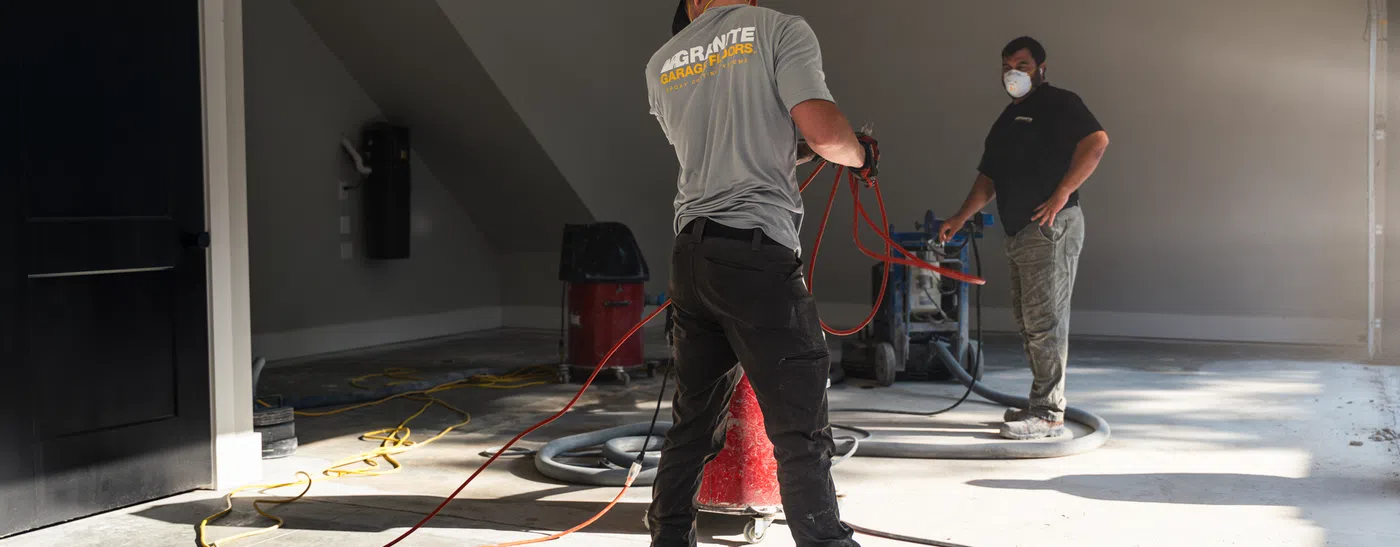
The Ultimate Guide to Comparing Garage Floor Coatings and Concrete Stains
Your Garage Floor Deserves More Than a Quick Fix: Why Epoxy Coatings Outperform Stains
Comparing garage floor coatings and concrete stains: which lasts longer? Here's the short answer:
Option |
Typical Lifespan |
Hot-Tire Resistance |
Chemical Resistance |
Best For |
Epoxy coating (professional) |
15-20+ years |
Excellent (with polyaspartic topcoat) |
Excellent |
High-traffic garages |
Polyaspartic topcoat |
15-20+ years |
Excellent |
Excellent |
UV-exposed, active garages |
Concrete stain + sealer |
3-7 years |
Poor |
Low |
Decorative, low-traffic areas |
Garage floor paint |
1-2 years |
Poor |
Poor |
Temporary fix only |
Epoxy coatings last significantly longer than concrete stains — typically 15 to 20+ years versus 3 to 7 years for stained concrete. Stains penetrate the surface and add color, but they form no real protective film. Epoxy bonds chemically and mechanically to concrete, creating a thick, durable layer that resists oil, hot tires, and heavy use.
Your garage floor takes a beating every single day. Hot tires, oil drips, road salt, and heavy foot traffic all add up fast. If your floor is already peeling, stained, or pitted, you've probably wondered whether a concrete stain or a proper epoxy coating is the better fix.
The difference matters more than most homeowners realize.
Concrete stains look great on day one. But they offer almost no protection — they're essentially colored water that soaks into the concrete. Once sealed, they still need resealing every two to five years just to maintain that look. And the moment an oil spill or hot tire hits a stained floor? The damage shows.
Epoxy coatings are a fundamentally different product. They form a hard, bonded surface that becomes part of the concrete itself. When topped with a polyaspartic finish — as part of a professional two-day installation process — epoxy systems can last decades with minimal maintenance.
This guide breaks down exactly what separates these two options, what each one costs over time, and which is right for your Atlanta garage.

Introduction to Epoxy Coatings and Concrete Stains
When we look at our garages, we often see spaces with massive potential. They are no longer just a place to park the car; they're an extension of our homes. Whether you use your garage as a workshop, a home gym, or simply a clean entryway, the floor sets the tone for the entire space.
Unfortunately, bare concrete is porous, dusty, and susceptible to staining. This leads homeowners in Atlanta and surrounding areas like Marietta, Alpharetta, and Decatur to explore options for beautifying and protecting their concrete.
The two most common paths for upgrading a garage floor are topical coatings — primarily epoxy systems — and concrete stains. While both options dramatically improve the visual appeal of a dusty gray slab, they perform very differently under pressure.
Choosing between them requires a clear understanding of how they interact with concrete. It also requires a realistic look at your garage's daily traffic and environmental exposure. If you want a floor that stands up to heavy SUVs, chemical spills, and the humid Georgia climate, durability must be your primary concern.
Understanding Epoxy Garage Floor Coatings vs. Concrete Stains
To understand why one system outlasts the other, we have to look at the science of how they bond to your concrete slab.
Epoxy Garage Floor Coatings: The Science of the Chemical Bond
An epoxy coating is not paint. It is a high-performance, two-part system consisting of a polymer resin and a hardener. When these two components are mixed, they undergo a chemical reaction that creates covalent bonds. This reaction transforms the liquid into a solid, rigid plastic surface.
A professional epoxy system does not merely sit on top of the concrete. During our meticulous installation process, the epoxy primer is applied to a thoroughly prepared slab. It sinks deep into the open pores of the concrete. As it cures, it fuses with the slab at a molecular level, becoming an inseparable part of the floor's structure.
To achieve the ultimate level of protection, we broadcast decorative flakes into this wet epoxy base and seal it with a high-solids polyaspartic topcoat. This creates a thick, multi-layer shield that is incredibly dense and impervious to outside elements.
Concrete Stains vs. Epoxy: Translucent Color with Limited Defense
Concrete stains work by penetrating the porous surface of the concrete to deposit pigment. There are two primary types of stains:
- Acid-based stains: These stains contain metallic salts that react chemically with the free lime (calcium hydroxide) in the concrete. This reaction permanently changes the color of the concrete, creating a variegated, mottled, stone-like appearance.
- Water-based stains: These are non-reactive formulations that deposit micro-pigments into the concrete's open pores. They act more like a translucent dye, offering a wider range of consistent colors.
While concrete stains excel at creating beautiful, natural-looking variations, they have a major limitation: they do not form a protective film. A stained floor is still just concrete. To protect the color from fading and wearing away, a topical sealer must be applied over the stain.
This sealer is typically a thin acrylic or polyurethane film that sits on the surface. Because this sealer is incredibly thin (often only 1 to 3 mils thick, compared to a professional epoxy system that can exceed 30 mils), it wears down quickly under vehicle traffic.
Comparing Epoxy Garage Floor Coatings and Concrete Stains: Which Lasts Longer? (The Epoxy Advantage)
When we ask, "Comparing garage floor coatings and concrete stains: which lasts longer?", the evidence overwhelmingly favors professional epoxy systems. Let's look at how these two flooring options perform head-to-head across key durability metrics.
Lifespan and Long-Term Durability of Epoxy vs. Stains
A professionally installed epoxy coating system with a polyaspartic topcoat typically lasts 15 to 20+ years in a residential garage. It does not require periodic recoating or intensive maintenance to preserve its structural integrity.
In contrast, concrete stains protected by standard sealers have a functional lifespan of only 3 to 7 years. Because the protective sealer is thin, it wears away in high-traffic paths, exposing the stained concrete beneath to abrasion, dirt, and staining. To prevent this, stained floors must be stripped and resealed every few years.
To understand the practical differences in how they wear, it is important to look at how each material handles daily automotive stress.
Hot-Tire Pickup Resistance of Epoxy Coatings
Hot-tire pickup is the ultimate test of any garage floor finish. When you drive your car on a hot summer day in Atlanta, your tires can reach temperatures exceeding 140°F. When you park in the garage, the weight of the vehicle presses those hot, expanded tires against the floor. As the tires cool, they contract, grabbing hold of the floor finish.
- Concrete Stains: The thin acrylic sealers used over concrete stains soften easily under heat. When the tire contracts and you drive the vehicle out of the garage, the tire pulls the sealer — and the stain — right off the concrete, leaving ugly black patches.
- Epoxy Systems: High-quality epoxy primers bonded to the concrete, coupled with a flexible, heat-resistant polyaspartic topcoat, easily withstand these thermal and physical stresses. The coating remains locked to the concrete, completely immune to hot tire pickup.
Chemical and Oil Spill Resistance of Epoxy Systems
Garages are prone to spills. Motor oil, transmission fluid, gasoline, antifreeze, and road salts are highly corrosive and staining.
Our multi-layer epoxy and polyaspartic systems create a completely seamless, non-porous barrier. Chemicals cannot penetrate this surface; they sit on top until you wipe them away with a simple paper towel or mild cleaner.
Stained concrete relies entirely on its thin sealer. If an oil spill sits on a stained floor for too long, it can eat through the sealer and penetrate the porous concrete below, permanently ruining the stain design.
UV Exposure and Color Retention of Epoxy and Polyaspartic Systems
If your garage has windows or is frequently left open, UV radiation from sunlight can cause finishes to yellow or fade. Standard epoxies can amber over time when exposed to direct sunlight.
However, we solve this by utilizing a high-performance polyaspartic topcoat over our epoxy base. Polyaspartic coatings are 100% UV-stable, meaning they will not yellow, fade, or chalk, regardless of how much Georgia sunshine they receive.
Concrete stains, particularly water-based varieties, are susceptible to fading under direct UV light, which can leave your floor looking dull and uneven over time.
For more information on how our professional systems protect your home, explore our residential coating systems.
Why Multi-Layer Epoxy Systems Outperform Concrete Stains in Durability
The secret to the incredible longevity of our garage floor coatings lies in our multi-layer approach and our refusal to cut corners on preparation.
Professional Surface Preparation: The Foundation of Epoxy Longevity
No coating or stain will last without proper surface preparation. Many quick-fix floor applications fail because they rely on acid etching. Acid etching is inconsistent and does not open up the concrete pores deeply enough for a heavy-duty coating.
We use industrial diamond grinders to mechanically profile the concrete slab. This process removes the weak top layer of concrete (laitance), cleans away oils, and opens up the concrete's capillary network, creating a profile similar to medium-grit sandpaper. This allows our epoxy primer to achieve a flawless mechanical bond.
Combating Moisture Vapor Transmission with Epoxy Primers
Concrete is like a hard sponge. Even if it looks dry on the surface, moisture from the earth beneath your home is constantly rising through the slab. This process is called moisture vapor transmission (MVT). Concrete is made from cement, water, and aggregates; in a garage slab, that cement-based structure contains pores and capillaries that can absorb and transmit moisture unless it is properly protected.
When moisture rises and hits a thin, non-breathable surface sealer (like those used on stained concrete), hydrostatic pressure builds up. This pressure can cause the sealer to blister, bubble, and peel away.
Our professional-grade 100% solids epoxy primer is specifically formulated to mitigate moisture. It penetrates deep into the concrete pores and cures to block this vapor transmission, preventing delamination and keeping the entire system locked in place.
The Power of the Two-Day Epoxy Installation Process
Some companies promote "one-day" polyurea or polyaspartic systems. While a fast installation sounds tempting, these quick-cure products do not have enough time to sink deep into the concrete pores before they harden. Using a fast-curing product as a direct-to-concrete primer is a common cause of premature peeling.
We believe in doing things right. Our two-day installation process ensures maximum durability:
- Day 1: We prepare the slab using diamond grinding, repair any cracks or pitting, and apply our deep-penetrating, moisture-mitigating epoxy base coat. We then broadcast a generous layer of decorative flakes to rejection, which adds thickness, texture, and structural strength to the floor.
- Day 2: We reclaim the excess flakes, sand the floor to ensure a comfortable texture, and apply two separate coats of UV-stable, chemical-resistant polyaspartic topcoat.
This deliberate process allows each layer to cure properly, resulting in a system that measures over 35 mils in thickness — more than ten times thicker than a stained and sealed floor.
Cost vs. Long-Term Value: Epoxy Coatings vs. Concrete Stains
When choosing a floor finish, it is easy to focus solely on the upfront price. However, looking at the total cost of ownership over 10 to 15 years reveals a very different financial picture.
Upfront Cost vs. Lifetime Value of Epoxy Coatings
Concrete staining is initially the more budget-friendly option. A stained and sealed floor typically costs between $2 and $7 per square foot, depending on the complexity of the design. A professional, multi-layer epoxy and polyaspartic coating system represents a higher initial investment, averaging $5 to $12 per square foot.
However, concrete stains require ongoing maintenance. Because the thin top sealer wears away under vehicle tires, you must pay to have the floor deep-cleaned, lightly abraded, and resealed every 2 to 5 years. If the sealer is neglected and the stain itself becomes damaged, the entire floor must be ground down and completely redone.
Over a 15-year period, the cost of repeatedly resealing a stained floor — or replacing failed paint — can easily exceed $1,200 to $1,500. Our high-performance epoxy system requires a one-time investment with virtually zero maintenance costs, making it the most cost-effective solution in the long run.
Long-Term Epoxy Cost Factors to Consider:
- Maintenance Time and Effort: Epoxy floors only require occasional sweeping and a quick mop with a pH-neutral cleaner. Stained floors require careful waxing or resealing to protect the thin color layer.
- Home Resale Value: A professionally coated garage floor finished in a granite or quartz look is viewed by homebuyers as a premium, low-maintenance upgrade. Stained concrete can sometimes feel cold or industrial to potential buyers.
- Downtime and Convenience: Our two-day installation process minimizes disruption, allowing you to return your heavy items and vehicles to the garage quickly, knowing the floor is cured and ready for action.
Frequently Asked Questions About Epoxy Coatings and Concrete Stains
Comparing Epoxy Garage Floor Coatings and Concrete Stains: Which Lasts Longer? (Epoxy vs. Stain Lifespan)
Our professional multi-layer epoxy systems last 15 to 20+ years without peeling or wearing through. Concrete stains, even when sealed, typically last only 3 to 7 years before the high-traffic areas show significant wear and require resealing.
Comparing Epoxy Garage Floor Coatings and Concrete Stains: Which Lasts Longer under Heavy Vehicle Traffic? (The Epoxy Answer)
Epoxy coatings offer superior abrasion and impact resistance. Heavy SUVs, rolling toolboxes, and hot tires will scratch or wear through the thin sealer of a stained floor very quickly. Our thick epoxy base and dual polyaspartic topcoats are engineered specifically to withstand heavy vehicle traffic and resist hot-tire pickup completely.
Can You Apply an Epoxy Coating Over Stained Concrete?
Yes, but you cannot apply epoxy directly over an existing sealer or stain. For the epoxy to bond, the concrete's pores must be completely open. We must use our professional diamond grinders to grind away the existing stain and sealer, exposing the clean, porous concrete underneath before we can install our multi-layer system.
Conclusion: Choosing the Best Epoxy Garage Floor Coating
When deciding between a concrete stain and an epoxy coating, your choice ultimately comes down to how you use your space and how long you want your investment to last.
If you are finishing a low-traffic covered patio or an interior basement room where aesthetics are the only concern, a concrete stain can be a beautiful choice. But for a hardworking garage floor exposed to the humidity of Atlanta, hot vehicle tires, oil drops, and daily foot traffic, comparing garage floor coatings and concrete stains has a clear winner.
A professional multi-layer epoxy system is the only option that delivers the long-term durability and protection your home deserves.
At Granite Garage Floors, we don't believe in temporary fixes. We install premium, industrial-grade epoxy and polyaspartic floor coatings that look like natural granite, quartz, or stone. Our proprietary system is backed by a Lifetime Satisfaction Warranty against peeling and hot-tire pickup, giving you total peace of mind.
Ready to transform your garage into a clean, beautiful space?
Schedule a consultation for Atlanta garage floor coatings today, and let us install a floor that looks like granite and is guaranteed to last!