
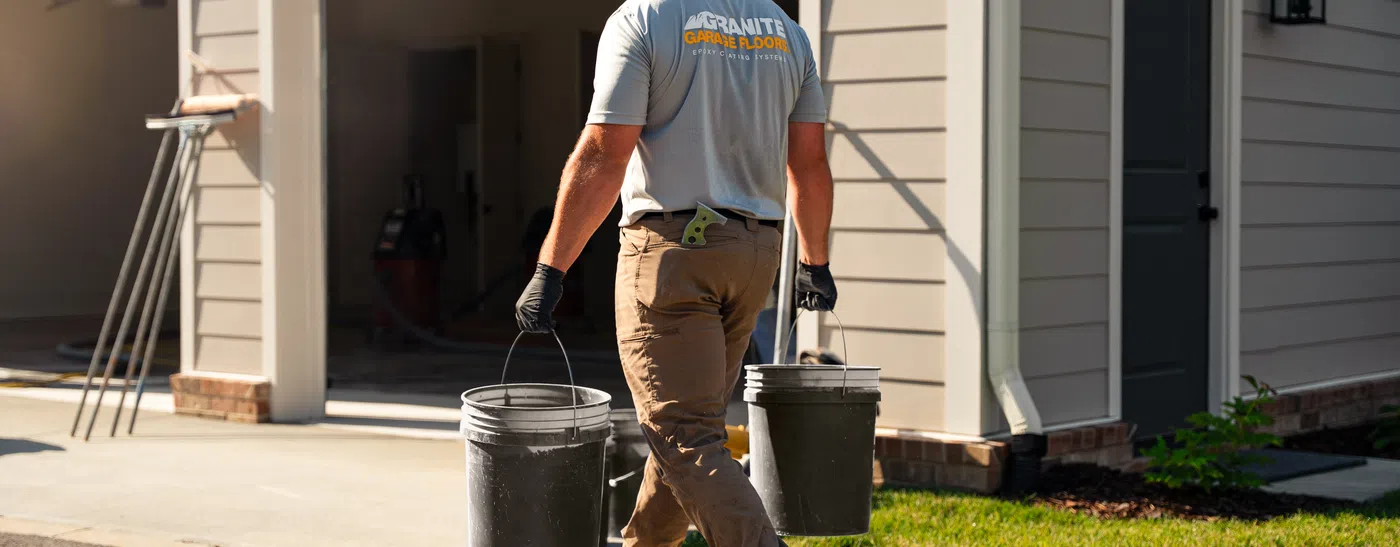
Understanding Epoxy Resin for Garage Floors and Its Core Benefits

When considering garage upgrades, understanding what makes epoxy resin for garage floors so special is essential. Unlike standard concrete sealers or topical surface coatings, epoxy is a thermosetting polymer created by combining resin and a hardener. When these two chemical compounds are blended during professional application, they undergo a reactive cross-linking process. This reaction creates a dense, rigid structure that mechanically bonds directly into the pores of the concrete substrate.
The result is a thick, seamless, nonporous layer that shields your underlying concrete from moisture, road salts, automotive chemicals, and physical abrasion. By transforming a basic slab into an engineered surface, epoxy resin for garage floors provides an extraordinary boost in physical strength and visual appeal.
How Epoxy Resin Coating Systems Work
The fundamental science behind epoxy resin for garage floors relies on molecular adhesion and chemical cross-linking. When our professional technicians mix liquid epoxy resin with hardener, a liquid-to-solid curing reaction takes place:
- Mechanical anchor: The liquid mixture penetrates into the microscopic pores of properly profiled concrete.
- Cross-linking: Polymer chains link tightly together in a dense molecular lattice as the resin cures.
- Impermeable seal: The chemical bond forms a monolithic barrier that blocks liquid intrusion, heavy loads, and hot tire lift.
Because it chemically locks onto the slab rather than merely sitting on top, high-solids epoxy creates an unyielding bond that resists structural stresses.
Comparing Epoxy Resin Systems vs Uncoated Concrete Floors
Bare concrete might look solid, but it is actually a highly porous sponge. Plain concrete constantly sheds microscopic silica dust, absorbs oil stains, and suffers surface crumbling under heavy vehicle traffic.
Here is how an advanced epoxy resin for garage floors system compares directly with standard uncoated concrete:
- Surface hardness: Epoxy resin application increases surface hardness by up to 300%, turning soft concrete into an impact-resistant shield.
- Dust & allergen reduction: Uncoated concrete constantly produces fine chalky dust. Epoxy resin encapsulates the floor entirely, reducing household dust and allergen accumulation by up to 90%.
- Temperature resilience: Professional epoxy coatings easily handle thermal extremes ranging from -40°F to 150°F, easily enduring freezing winter nights and blazing hot summer driving.
- Longevity & durability: While unsealed concrete degrades and flakes under vehicle weight, a professionally installed epoxy floor system easily lasts 10 to 20 years with basic care.
Selecting the Right Epoxy Resin Flooring Systems and Topcoats
Navigating the various formulations of epoxy resin for garage floors ensures you invest in a system that fits your aesthetic vision and functional demands. The heavy-duty standard for high-traffic residential spaces is a 100% solids epoxy base coat. Unlike water-based or solvent-thinned alternatives, 100% solids epoxy contains zero volatile organic solvents that evaporate away during curing, meaning the thickness applied stays entirely behind to form a robust armor layer.
To create an elevated stone-like aesthetic, colorful decorative vinyl chips can be broadcast into the thick epoxy base layer. Want to discover style options that recreate the refined feel of natural granite, quartz, or polished terrazzo? You can explore garage floor finishes to see how decorative flake patterns transform ordinary garages.
Key Factors When Choosing Epoxy for Garage Floors
When selecting the ideal epoxy resin for garage floors, evaluate these critical performance criteria:
- Moisture Vapor Transmission (MVT): Ground moisture rising through a concrete foundation can cause inferior coatings to bubble or delaminate. Selecting an epoxy resin base coat engineered with moisture-mitigating properties protects the system from hydrostatic pressure.
- Vehicle weight & hot tire pickup: Hot tires coming off the highway soften poor coatings, lifting them right off the concrete. Premium epoxy resins form permanent heat-resistant bonds that prevent hot tire peeling.
- Chemical exposure: Your garage floor regularly encounters battery acid, motor oil, antifreeze, and de-icing chemicals. High-performance epoxy resin provides superior resistance to chemical pitting and staining.
Combining Epoxy Resin Base Coats with Polyaspartic Topcoats
Homeowners often ask about the role of polyaspartic in a professional system. Polyaspartic is strictly a topcoat that works in tandem with epoxy, not a standalone or competing product. The highest-performing garage floor systems rely on epoxy as the primary hero layer while utilizing polyaspartic as a surface shield:
- Epoxy resin base coat: Serves as the ultimate structural foundation and primary hero product, delivering deep mechanical adhesion into the prepared concrete for unmatched impact and peel resistance.
- Polyaspartic clear topcoat: Applied directly over the epoxy resin and flake broadcast layer, polyaspartic functions exclusively as an ultra-durable clear topcoat. It provides complete UV stability to prevent yellowing under direct sunlight, superior scratch resistance, and rapid final curing.
This hybrid architecture combines the supreme bond strength of epoxy resin for garage floors with the crystal-clear, UV-stable defense of a polyaspartic topcoat.
Professional Installation: The Epoxy Garage Floor Process
Achieving a seamless, permanent finish with epoxy resin for garage floors requires flawless surface preparation and meticulous execution. A coating is only as good as the surface beneath it.
Our installation team relies on a proven 2-day installation process that sets the gold standard for long-term coating performance. By allocating two full days to complete the preparation, repairs, base layer application, and topcoat sealing, we ensure every coat cures optimally with zero compromise on quality.
Here is a look at how our professional 2-day installation process delivers superior results compared to rushed single-day methods:
Phase / Day |
Installation Step |
Key Objective for Epoxy Resin Performance |
Day 1: Morning |
Industrial diamond grinding |
Mechanical profiling (CSP 2-3) opens concrete pores for deep epoxy resin penetration |
Day 1: Midday |
Crack repair & joint restoration |
High-strength polymer patching ensures a completely smooth, continuous substrate |
Day 1: Afternoon |
Epoxy resin base coat & flake broadcast |
Deep-penetrating 100% solids epoxy base coat applied; full decorative flake saturation |
Day 2: Morning |
Excess flake reclaim & scrape |
Floor hand-scraped and vacuumed to smooth texture and ensure uniform feel |
Day 2: Midday |
Clear polyaspartic topcoat application |
UV-stable polyaspartic clear topcoat installed over epoxy resin layer to seal system |
Applying Epoxy Over Existing Concrete
Can epoxy resin for garage floors be installed on older, damaged, or pitted concrete slabs? Absolutely! However, success depends entirely on proper substrate rehabilitation:
- Surface profiling: Using heavy diamond-grinding equipment, our team removes old surface contaminants, laitance, and paint to expose raw, textured concrete.
- Crack & spall restoration: Structural cracks, pitted areas, and spalled concrete are repaired using specialized polymer fillers that cure harder than the concrete itself.
- Moisture & adhesion testing: We inspect the concrete substrate to verify that moisture vapor levels fall within safe operational guidelines before applying the deep-penetrating epoxy resin base coat.
Taking the extra time over a dedicated 2-day timeline guarantees that your foundation is perfectly conditioned to lock onto the coating permanently. Want to see every step of our professional standard? Learn about our coating process in detail.
Investment, Maintenance, and Longevity of Epoxy Garage Floors
Investing in a professionally installed epoxy resin for garage floors system delivers exceptional financial and functional ROI. According to real estate and home improvement market data, a high-quality finished garage floor can boost overall residential resale value by 2% to 3%, while turning an underutilized workspace into a clean, highly functional room.
For standard two-car residential garages, professional epoxy resin installation typically costs between $1,500 and $4,000, depending on overall square footage, concrete condition, and customized flake selections. Given that a professionally applied system easily lasts 10 to 20 years, the cost-per-year makes high-solids epoxy resin one of the most economical long-term home upgrades available.
Caring for Your Epoxy Floor Over Time
Maintaining an epoxy garage floor system is easy because nonporous surfaces prevent dirt, fluids, and grime from penetrating into the slab.
Follow these simple care guidelines to keep your finish looking brand new:
- Weekly dust mopping: Sweep or dust-mop the floor to clear loose debris, road sand, and dry dirt.
- Gentle damp mopping: For periodic deep cleaning, mix warm water with a few ounces of a mild, pH-neutral clear cleaner or simple dish soap. Avoid harsh acids, ammonia, or bleach.
- Immediate spill cleanup: While epoxy resists automotive fluids, wiping up oil, gas, or chemical spills promptly prevents any film buildup.
- Use protective pads: Place soft pads under heavy jack stands or welded metal furniture legs to avoid gouging the finish.
Frequently Asked Questions About Epoxy Resin Garage Flooring
How Long Does an Epoxy Resin Coating Take to Cure Completely?
While our professional 2-day application completes the installation rapidly, curing is a multi-stage chemical process. Light foot traffic is generally permitted within 24 hours after the polyaspartic topcoat is applied over the epoxy resin. Vehicles can typically park on the new surface after 72 hours (3 days). Full chemical curing, which achieves maximum hardness and chemical resistance, completes in approximately 7 days. Warm weather and lower humidity accelerate cure times, while cooler temperatures extend them slightly.
Can Damaged or Cracked Concrete Base Floors Be Coated with Epoxy Resin?
Yes! Damaged, cracked, or pitted concrete can easily host a long-lasting epoxy system, provided structural restoration occurs prior to resin application. Our technicians fill surface cracks, gouges, and pitted areas with high-density polymer materials that bind directly with the concrete. Once ground flush with industrial diamond tooling, the repaired area becomes an unbroken plane ready to accept the high-solids epoxy base coat.
What Is the Best Way to Clean and Maintain an Epoxy Garage Floor?
The simplest cleaning routine for an epoxy coated garage floor is regular dust mopping combined with occasional damp mopping using warm water and a pH-neutral cleaner. Avoid harsh floor waxes, abrasive powders, or strong solvent cleaners, as these can leave a dulling film over the clear topcoat. Because the finished surface is nonporous, dirt wipes off effortlessly without heavy scrubbing.
Conclusion on Epoxy Garage Flooring Systems
Choosing epoxy resin for garage floors transforms an overlooked, dusty garage into a durable, pristine, and valuable extension of your home. By anchoring a dense 100% solids epoxy resin base coat to professionally ground concrete and sealing it with a high-performance polyaspartic topcoat, you gain a floor system engineered to handle decades of heavy vehicles, thermal shifts, and everyday wear without peeling or staining.
At Granite Garage Floors, we combine industrial-grade materials with our precise 2-day installation process to deliver garage surfaces that look and perform like natural stone. Every residential installation is backed by our uncompromised Lifetime Satisfaction Warranty against peeling and hot tire pickup.
Ready to elevate your garage floor with a premium finish that lasts? Contact Granite Garage Floors for residential coatings today to schedule your free consultation!