
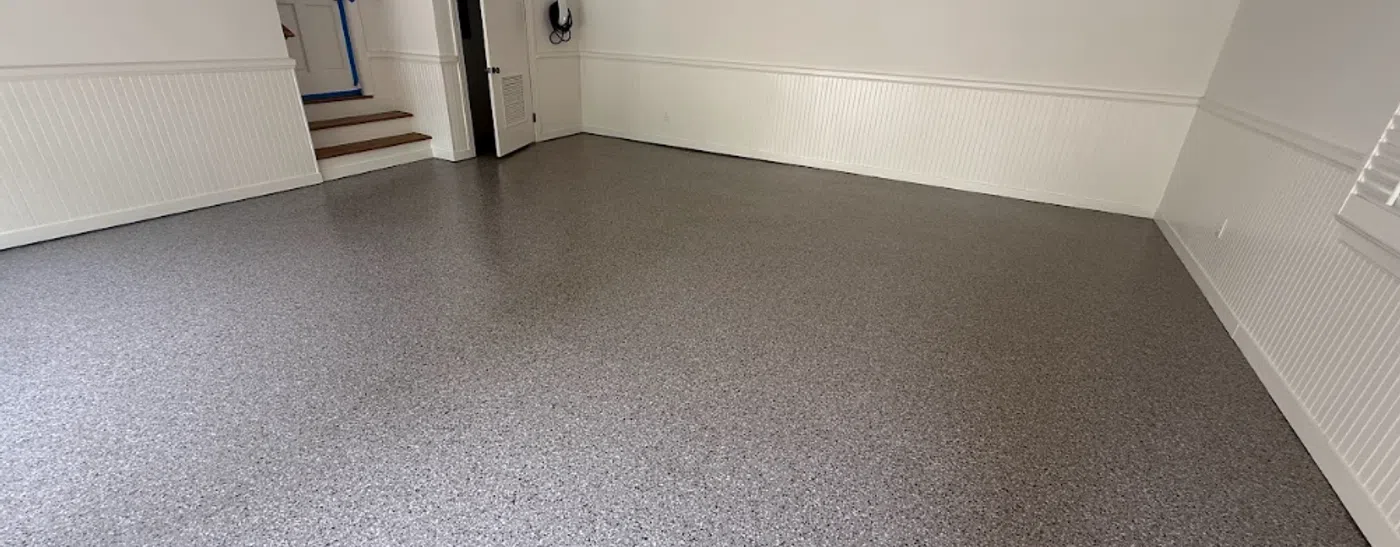
Choosing the Best Epoxy Garage Floor Color
The best color for epoxy garage floor surfaces is usually a medium gray or warm gray with a full decorative flake blend. It makes the garage feel brighter than dark colors, hides dust and tire marks better than very light colors, and disguises small concrete flaws and everyday wear.
Choose based on how you use the space:
- Medium gray with granite-style flakes: Best all-around choice for most Atlanta garages.
- Tan or beige with brown-gray flakes: A warm option that pairs well with brick, stone, and earth-tone exteriors.
- Light gray with subtle flakes: Best for making a smaller or darker garage feel larger and brighter.
- Charcoal or dark blends: A sharp showroom look, but more likely to show dust, scratches, and water spots.
Color is not only about style. The right epoxy base color, flake coverage, and UV-stable clear topcoat help a floor keep its clean appearance through oil drips, family traffic, sunlight, and hot tires. Applying a protective polyaspartic topcoat over an industrial 100% solids epoxy base installed through our proven two-day process ensures lasting color stability and protects gloss from yellowing.
Below, we break down the colors, flake blends, and finish choices that make an epoxy garage floor look great for years.

Most Popular Epoxy Floor Colors and Visual Impacts
Selecting the right tone transforms a utilitarian space into a seamless extension of your living environment. Modern concrete coatings rely on industrial-grade 100% solids epoxy base coats that create a heavy-duty mechanical bond up to three times harder than standard concrete.
Because epoxy is the foundational hero of any long-lasting garage coating, the tint of your base epoxy layer sets the visual baseline for your entire garage.
Light Gray and Neutral Tone Epoxy Systems
Light gray remains the single most requested epoxy base shade across residential garages. Cool neutral epoxy formulations mimic polished industrial stone while bouncing natural daylight and overhead LED illumination into every corner of the room.
If your garage lacks large exterior windows, a light or medium gray epoxy foundation instantly counteracts dim lighting, creating an open, expansive aesthetic that feels clean and modern.
Earthy Tans, Browns, and Beige Epoxy Coatings
Warm earth-toned epoxy systems, ranging from soft cream and sand to rich mocha, offer a classic, welcoming visual warmth. Beige and tan epoxy foundations are engineered to replicate natural stone such as granite, travertine, or sandstone.
These warm tones are particularly forgiving when vehicles track in outdoor garden soil, clay dirt, and seasonal pollen, masking daily debris naturally between routine cleanings.
Bold Blues, Dark Charcoals, and Metallic Epoxy Effects
For homeowners who treat their garage as an exotic car showroom, man cave, or dedicated detailing bay, bold epoxy options deliver dramatic visual impact. Deep charcoal and slate epoxy bases establish a sleek, modern, high-contrast aesthetic.
When paired with specialized metallic pigments or deep cobalt blue tones, the epoxy base produces three-dimensional visual depth that catches the light like molten metal.

Practical Performance: Light vs. Dark Epoxy Floor Shades
Choosing between light and dark epoxy coatings involves balancing spatial perception with everyday maintenance requirements.
Performance Factor |
Ultra-Light Epoxy Base |
Medium Neutral Epoxy Base |
Deep Dark/Charcoal Epoxy Base |
Light Reflectivity |
Exceptional (maximizes ambient lumen output) |
High (balances brightness without glare) |
Low (absorbs light, requires added fixtures) |
Hiding Dry Dust & Dirt |
Moderate (shows dark yard dirt and mud) |
Excellent (blends across dust and debris) |
Poor (shows light drywall dust, pet hair, salt) |
Tire Mark Concealment |
Low (dark rubber transfers stand out) |
Very High (especially when paired with flakes) |
High (blends dark rubber tread marks) |
Heat Absorption |
Low (stays cooler in direct summer sun) |
Moderate (stable surface temperature) |
High (absorbs heat near garage door apron) |
Light Reflectivity and Perceived Garage Space with Epoxy
Garages often suffer from limited window access and minimal lighting. Applying a high-gloss, light-reflective epoxy floor coating multiplies existing lumen output, dispersing light evenly across the ceiling and walls.
This optical reflection visually expands the footprint of smaller, two-car garages, turning a cramped utility area into a well-lit workshop where you can easily find dropped tools, nuts, and bolts.
Hiding Dirt, Dust, Scratches, and Hot Tire Marks on Epoxy Floors
The enemy of any garage floor is hot tire pickup. High-performance 100% solids epoxy features a high glass transition temperature (Tg) of 80-100°C, which resists the 65-75°C heat generated by radial tires after highway driving.
While the chemical composition of the epoxy prevents peeling, the color you select determines how clean the surface looks between washings:
- Dark charcoal/black: Conceals dark tire tracks well, but highlights light-colored dust, sawdust, and superficial scratches.
- Pure white/off-white: Provides maximum illumination, but highlights tracked-in road grime, engine oil drips, and rubber scuffs.
- Medium gray & earthy blends: The sweet spot that hides both light dust and dark rubber marks effortlessly.
How to Choose the Best Color for Epoxy Garage Floor Transformations
When evaluating your color scheme, consider the architectural lines of your home, your garage's primary functional purpose, and the overall aesthetic harmony.

To guarantee that your chosen color stays bonded and beautiful for decades, we rely on a dedicated professional two-day installation process.
Rather than rushing surface preparation and chemical bonding into a single afternoon, our two-day installation gives the 100% solids epoxy base coat the open cure time required to penetrate deep into the prepared concrete pores. This creates an unbreakable mechanical bond before the decorative chips and protective topcoats are applied.
Matching the Best Color for Epoxy Garage Floor Designs to Your Home Exterior
Your garage floor should not look like an afterthought; it should complement your home's exterior trim, driveway pavers, and brick or siding palette:
- Brick & stone facades: Tan, mocha, and beige epoxy bases blend naturally with the reddish and earthy undertones of traditional brickwork and masonry.
- Modern white, gray, or charcoal siding: Neutral gray or slate epoxy bases harmonize with contemporary, monochromatic exterior paint schemes.
- Warm stucco or wood accents: Sandstone, almond, or warm gray epoxy provides architectural cohesion without competing with natural wood grains.
The Best Color for Epoxy Garage Floor Spaces: Workshop vs. Showroom Needs
How you utilize your garage dictates whether functional visibility or dramatic styling should lead your design choice:
- Active workshop & woodworking: Opt for medium-to-light gray epoxy. Lighter backgrounds make dropped screws, hardware, and measurement markings easy to spot on the floor.
- Automotive restoration & detailing: Medium gray epoxy with contrasting flakes provides the ideal neutral backdrop that does not distort paint reflections when polishing vehicle panels.
- Luxury showroom & storage: High-gloss charcoal or custom metallic epoxy creates dramatic, deep reflections that accentuate the stance and silhouette of stored vehicles.
Enhancing Epoxy Colors with Decorative Flake Systems and Protective Topcoats
Applying a solid epoxy color provides clean coverage, but pairing your epoxy foundation with a full broadcast decorative flake system elevates both performance and beauty.
Full Broadcast Flakes, Quartz, and Mica Blends for Epoxy Foundations
A full broadcast flake system involves saturating the wet 100% solids epoxy base coat until rejection with multi-colored vinyl chips, colored quartz, or genuine mica mineral flakes.
This creates a seamless, multi-dimensional finish mimicking natural quarried granite. Beyond aesthetics, broadcasting flakes across the epoxy foundation provides several functional advantages:
- Hiding concrete imperfections: The randomized patterns disguise repaired hairline cracks, small divots, and natural slab inconsistencies.
- Enhanced slip resistance: Embedded chips create subtle surface micro-texture, mitigating slip hazards when rain or melted snow is tracked inside.
- Extreme impact resistance: Dense flake layers add structural thickness, cushioning the epoxy base against accidental tool drops and heavy equipment rolling loads.
UV Protection: Polyaspartic and Polyurethane Topcoats for Epoxy Color Stability
Standard epoxy formulations are aromatic resins, meaning prolonged exposure to the UV spectrum from open garage doors can cause an unprotected epoxy layer to yellow, fade, or amber over time.
To safeguard the color integrity and clarity of the epoxy base, we apply a clear polyaspartic topcoat directly over the flake-infused epoxy base.
Polyaspartic acts as an ultra-durable, UV-stable topcoat that works together with epoxy rather than replacing it. While the 100% solids epoxy delivers unmatched adhesion and concrete bonding strength underneath, the polyaspartic topcoat serves as a shield that will not yellow, chalk, or haze over years of direct sun exposure.
Furthermore, this combined multi-layer system adheres strictly to the highest concrete coating standards, retaining its high gloss and chemical resistance for decades.
Frequently Asked Questions About Garage Floor Epoxy Colors
What is the easiest epoxy garage floor color to keep clean?
A medium gray or warm taupe base coated with a full broadcast granite-style flake blend is by far the easiest to maintain. The multi-tonal chips camouflage daily road dust, dried rainwater spots, dried mud, and tire marks. Routine cleaning simply involves an occasional sweep with a soft dust mop and a damp microfiber mopping with a neutral pH cleaner.
Will sunlight cause my colored epoxy garage floor to turn yellow?
Sunlight can yellow an unprotected epoxy coat because standard aromatic epoxy resins are naturally sensitive to UV radiation. However, when your floor system is sealed with an advanced polyaspartic clear topcoat, the topcoat absorbs and blocks the UV rays, keeping the underlying epoxy base and decorative flakes vibrant and non-yellowing.
How do I choose between a solid epoxy color and a flake blend?
Solid epoxy colors deliver a sleek, minimalist, ultra-smooth commercial appearance, but they show surface dust, foot traffic, and minor abrasions much more readily. A full broadcast flake blend embedded into an epoxy base provides enhanced visual depth, hides surface wear, improves wet traction, and creates a high-end natural stone finish that maintains its showroom appearance with minimal effort.
Conclusion: Selecting Your Ideal Epoxy Garage Floor Color
Choosing the right color for your garage floor coating balances personal aesthetic taste with practical, long-term durability. By anchoring your transformation with a heavy-duty 100% solids epoxy base and sealing it with a crystal-clear, UV-stable polyaspartic topcoat, you ensure your floor maintains its brilliant shine, resists hot tire peeling, and withstands decades of daily family use.
Whether you prefer the crisp, light-reflecting brightness of a classic gray granite blend or the warm, welcoming appeal of an earthy sandstone finish, our specialized two-day installation process ensures your concrete slab is properly prepped, primed, and coated for a lifetime of beauty.
To explore custom flake blends and bring a permanent, showroom-quality stone finish to your garage, connect with our professional installation team at Granite Garage Floors Atlanta today.