
The Power of Epoxy for Finishing Concrete Garage Floor Surfaces

Finishing your concrete garage floor with a professional epoxy coating is one of the highest-impact upgrades you can make to your Atlanta home.
Quick answer: How do you finish a concrete garage floor?
- Assess your slab — check for cracks, moisture, and thickness
- Prepare the surface — professional diamond grinding to achieve a CSP 2-3 concrete profile
- Apply a 100% solids epoxy base coat — chemically bonds to concrete for maximum adhesion
- Broadcast decorative flakes — granite or quartz finish for aesthetics and texture
- Seal with a polyaspartic topcoat — scratch, chemical, and UV resistance over your epoxy system
- Return to service in 2 days — professional installation means minimal disruption
Your garage floor takes a beating every single day. Hot tires. Oil drips. Road salt tracked in from Atlanta traffic. The result? A pitted, stained, peeling surface that absorbs everything and looks worse every year.
The good news: epoxy changes all of that.
A professionally applied epoxy coating doesn't just sit on top of your concrete — it chemically bonds into it, creating a surface that resists stains, repels chemicals, and holds up under heavy use for years. With the right professional system, your floor goes from worn-out slab to showroom-quality surface in just two days.
This guide walks you through everything you need to know — from assessing your slab to understanding why professional epoxy outperforms anything you'll find on a store shelf.

Assessing Your Slab Before Epoxy Finishing Concrete Garage Floor Projects
Before we even think about opening a bucket of industrial epoxy, we have to look closely at the canvas we are working with: your concrete slab. You wouldn't paint a masterpiece on a rotting wooden board, and you shouldn't apply a premium epoxy system to a structurally compromised slab.
When we evaluate a garage floor, we look at several key structural factors:
- Slab Thickness: A standard, high-quality residential garage floor should be a minimum of 4 inches thick, though a 6-inch reinforced concrete slab is the gold standard for supporting heavy modern SUVs and trucks. Slabs poured under 4 inches thick are highly prone to premature cracking and settling under vehicle weight.
- Structural Integrity: We assess whether the slab is level and check for signs of shifting. Slabs in freeze-thaw climates undergo significant stress as the ground shifts, which can lead to deep cracking if the subgrade was not properly compacted.
- Surface Condition: We check for scaling, spalling (where the top layer of concrete chips away), and previous coatings or sealers that could block our epoxy from bonding.
Evaluating these factors upfront ensures that when we apply our industrial epoxy system, it has a solid, permanent foundation to grip onto.
When to Repair an Existing Slab Before Epoxy Finishing Concrete Garage Floor Applications
Most garage floors do not need to be completely replaced. If your floor has surface-level cosmetic issues, a professional repair is highly effective and saves you thousands of dollars.
We look for repairable issues such as:
- Hairline and Surface Cracks: Minor shrinkage cracks are incredibly common and easily mended.
- Pitting and Spalling: Small divots caused by road salt or impact damage can be patched using specialized concrete menders.
- Cosmetic Stains: Oil, grease, and tire marks are easily addressed during the mechanical preparation phase.
Before any coating is applied, we must also run critical diagnostic tests. Moisture is the number-one enemy of resinous floor coatings. If moisture vapor rises through an unsealed slab, it creates hydrostatic pressure that can lift the coating, resulting in unsightly blisters.
To prevent this, we perform a plastic sheet test or a professional calcium chloride test to measure moisture vapor transmission. This diagnostic step ensures the epoxy achieves an unbreakable mechanical bond.
Addressing Severe Concrete Damage Before Refinishing with an Epoxy Concrete Garage Floor System
Sometimes, a garage floor is past the point of simple repairs. If your slab has full-depth structural cracks, severe heaving (where one side of a crack sits higher than the other), or is sinking due to poor subgrade preparation, a full replacement is required.
In major metropolitan areas, a full concrete garage floor replacement can range from $15 to $25 per square foot, with a typical single-car garage replacement starting around $6,500.
If you do go the route of pouring a new slab, patience is required. Concrete takes a full 28 days to undergo its hydration process and reach its design strength. During this curing window, the concrete releases highly alkaline water. Attempting to coat new concrete before this 28-day window closes is a recipe for immediate failure, as the trapped moisture and high pH levels will destroy the chemical bond of any coating. Once the slab has fully cured and dried, it is ready for our professional epoxy system.
The Professional Epoxy Process of Finishing Concrete Garage Floor Surfaces
Applying an epoxy system that stands up to daily automotive abuse is a highly technical process. It requires industrial-grade equipment, precise chemical mixing, and experienced technicians who know how to handle the material within its strict application windows.
Why Mechanical Grinding Prepares Concrete for Superior Epoxy Adhesion
If you remember only one thing from this guide, let it be this: surface preparation is 90% of the job.
To achieve a permanent bond, the concrete must be mechanically "opened up." We use heavy, diamond-tipped planetary grinding machines to shave off the top micro-layer of weak concrete, removing oil stains, old sealers, and curing compounds. This mechanical grinding creates a Concrete Surface Profile (CSP) of 2 to 3, which feels similar to 150-grit sandpaper.
Some retail products suggest using acid etching (hydrochloric or sulfamic acid) as a preparation method. However, professional installers avoid acid etching for several reasons:
- Inconsistent Results: Acid relies on a chemical reaction with the calcium carbonate in the concrete. If the slab is tightly troweled or has a previous sealer, the acid will simply sit on top without profiling the concrete.
- Moisture Intrusion: Acid etching requires flooding your garage with gallons of water to flush the acid away. This introduces massive amounts of moisture into the slab, which can take days to dry out before it is safe to apply epoxy.
- Safety Hazards: Acid fumes are highly toxic, can ruin your garage doors and water heater, and present serious skin and eye hazards.
Our mechanical diamond grinding process is dry, safe, and utilizes advanced dust-containment vacuums to keep your garage clean. This creates the perfect porous surface for our epoxy to sink into, ensuring it penetrates 1 to 3 millimeters into the concrete pores to form a bond stronger than the concrete itself.
To see how we execute this step with precision, read More info about our professional process.
Preparing New Concrete for a Professional Epoxy Coating
When dealing with a newly poured concrete garage floor, the preparation steps are slightly different but no less strict. Even though the concrete is clean and free of oil stains, it still has a smooth, power-troweled finish that must be ground down to a CSP 2-3 profile.
We also carefully monitor the moisture levels of the new slab. As the concrete cures over its mandatory 28-day window, moisture vapor transmission is at its peak. We use digital moisture meters to verify that the slab has dropped below the critical moisture threshold before we mix and apply our commercial-grade epoxy base coat.
Why Professional Epoxy is the Hero of Finishing Concrete Garage Floor Coatings
When it comes to finishing concrete garage floor spaces, epoxy is the undisputed hero of the story. It is the powerhouse layer that does the heavy lifting, providing the structural build, the chemical bond to the concrete, and the thickness required to level out minor imperfections in your slab.
However, not all epoxies are created equal. Let's look at how a professional-grade, 100% solids epoxy compares to the single-component retail products you might find at a local home improvement store:
Feature |
Professional 100% Solids Epoxy System |
Substandard Retail 1-Part Coatings |
Material Composition |
100% active epoxy resins and hardeners |
Water-based or solvent-based latex/acrylic |
Dry Film Thickness |
10-20 mils per coat (thick and protective) |
1-3 mils (paper-thin layer) |
Curing Mechanism |
Exothermic chemical reaction (hardens completely) |
Solvent evaporation (shrinks as it dries) |
Hot-Tire Resistance |
Structural bond prevents hot-tire pickup |
High failure rate; tires peel paint off easily |
Expected Lifespan |
10 to 20+ years |
1 to 3 years before peeling and wearing |
Retail products are typically water-based formulations designed for easy application. However, because they dry through evaporation, they lose up to 50% of their thickness as they dry, leaving behind a thin, vulnerable film.
Our industrial 100% solids epoxy base coat undergoes a chemical reaction that cures into a dense, rock-hard plastic barrier that will not shrink, peel, or blister when properly applied.
The Role of Polyaspartic Topcoats in Finishing Concrete Garage Floor Epoxy Systems
While our 100% solids epoxy is the structural workhorse of the system, every hero needs a trusty sidekick. That is where our polyaspartic clear topcoat comes in.
Polyaspartic is not a competitor or an alternative to epoxy; rather, it is the ultimate topcoat that works in tandem with our epoxy base. While epoxy provides the deep adhesion and thickness, standard epoxies can yellow or chalk when exposed to UV light over time.
By applying a high-solids polyaspartic topcoat over our epoxy-and-flake system, we lock in the color and gain several massive performance advantages:
- UV Stability: Polyaspartic topcoats are 100% UV stable, meaning your floor will never turn yellow or fade, even if your garage door is left open to the Atlanta sun.
- Extreme Chemical Resistance: It repels harsh chemicals, including gasoline, brake fluid, anti-freeze, and battery acid.
- Scratch and Abrasion Resistance: It is highly resistant to scratches from dropped tools, lawnmowers, and heavy storage bins.
- Rapid Return to Service: Polyaspartic cures quickly, allowing us to complete our signature multi-layer systems in just two days.
Designing Your Epoxy Floor: Flakes, Finishes, and Aesthetics
Finishing your garage floor isn't just about protection — it is also about turning a dusty utility space into an extension of your home.
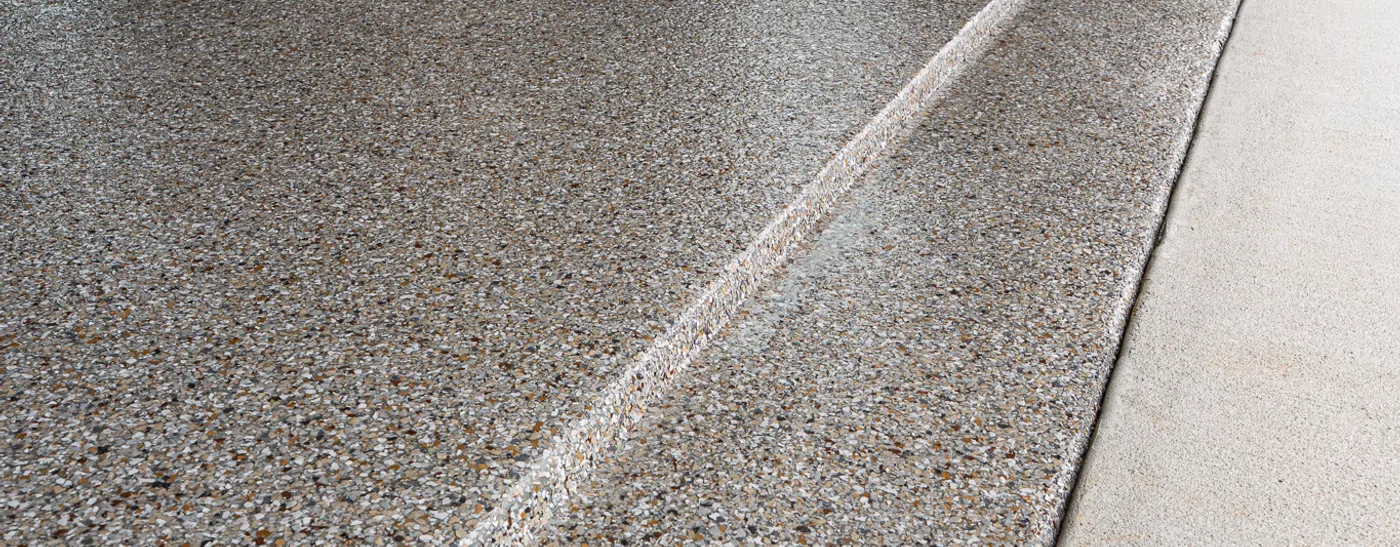
By broadcasting decorative vinyl flakes into the wet epoxy base coat until the floor is completely saturated, we create a beautiful multi-dimensional finish that mimics the look of natural granite or quartz stone.
These flakes do more than just look pretty:
- Texture and Slip Resistance: The flakes create a textured surface that provides excellent traction, preventing the floor from becoming slick when wet.
- Hiding Imperfections: The multi-colored granite pattern naturally hides dirt, dust, and minor concrete imperfections.
- Customization: You can choose from dozens of color combinations to match your home's aesthetic.
Whether you are looking for a sleek grey stone look in Buckhead or a warm tan granite finish in Alpharetta, we customize the blend to suit your style. To explore our design options, check out More info about our residential coating systems.
The Value of Professional Epoxy Installation for Finishing Concrete Garage Floor Projects
The difference between a frustrating floor failure and a lifetime of satisfaction comes down to professional execution. Across the Atlanta metro area—from Acworth and Canton to Peachtree City and Braselton—homeowners trust us because we have the specialized equipment, industrial materials, and training to get the job done right the first time.
The Pitfalls of Substandard Retail Epoxy Products
It is incredibly common for homeowners to attempt to use retail floor paints or cheap DIY epoxy kits, only to watch them fail within the first year. Because these retail products lack a high solids content and are applied over poorly prepared concrete (often prepared with a weak acid wash), they cannot handle the thermal expansion and physical stress of hot automotive tires.
When you park your car after driving on hot Atlanta highways, your tires cool down and contract. This contraction creates a vacuum-like grip on the floor. If the coating is thin and poorly bonded, the tire will literally pull the paint off the concrete when you back out of the garage. This is known as "hot-tire pickup," and it is the most common failure mode for cheap retail coatings.
The Benefits of a Professional 2-Day Epoxy System for Finishing Concrete Garage Floor Projects
When you work with Granite Garage Floors, you are investing in an industrial-grade system designed to last as long as your home. Our process is streamlined, clean, and highly efficient:
- Day 1: Preparation & Base Coat: We use our heavy diamond-grinding equipment to profile your concrete, repair any cracks or divots, apply our industrial 100% solids epoxy base coat, and broadcast our decorative flakes to 100% saturation.
- Day 2: Recovery & Topcoat: We scrape away the excess loose flakes, vacuum the surface to ensure a uniform texture, and apply our premium, UV-stable polyaspartic topcoat.
- The Lifetime Warranty: Because we use industrial-grade polymers and prepare the slab with professional diamond grinders, we back our floors with a Lifetime Satisfaction Warranty against peeling and hot-tire pickup.
Frequently Asked Questions about Epoxy Finishing Concrete Garage Floor Systems
How long does it take for a new concrete garage floor to cure before epoxy coating?
A newly poured concrete slab must cure for a minimum of 28 days before we can apply our professional epoxy system. This 28-day window allows the concrete to complete its hydration process, gain its full structural strength, and release excess moisture. If you coat the concrete too early, trapped moisture vapor and high alkalinity will cause the epoxy to bubble and peel.
What maintenance is required for an epoxy garage floor with a polyaspartic topcoat?
One of the best parts of our professional epoxy system is how incredibly easy it is to clean. Because the polyaspartic topcoat is completely non-porous, dirt, oil, and chemicals cannot penetrate the surface.
- Weekly: Simply sweep or leaf-blow out loose dirt and dust.
- Monthly: Mop the floor with warm water and a mild, non-filming detergent (like ammonia or a drop of dish soap). Avoid using vinegar or citrus-based cleaners, as these acids can dull the clear topcoat over time.
Will hot tires peel or damage a professional epoxy floor coating?
No. While cheap retail floor paints peel easily under hot tires, our professional system is engineered to prevent hot-tire pickup entirely. By mechanically grinding the concrete to open up its pores and applying a 100% solids epoxy base coat, we create a deep, molecular bond with the concrete. We are so confident in this bond that we offer a Lifetime Satisfaction Warranty against hot-tire peeling.
Conclusion: Choose the Best Epoxy for Finishing Concrete Garage Floor Spaces
Finishing your concrete garage floor shouldn't be a stressful project that ends in peeling paint and frustration. By choosing a professional, industrial-grade epoxy system with a polyaspartic topcoat, you turn your garage into a clean, beautiful, and highly durable space that adds real value to your home.
At Granite Garage Floors, we combine the best industrial-grade materials with expert diamond-grinding preparation to deliver a floor that looks like natural granite and stands up to the toughest daily abuse. Backed by our Lifetime Satisfaction Warranty against peeling and hot-tire pickup, you can rest easy knowing your garage floor is finished for good.
Ready to upgrade your garage? Schedule a free estimate for your Atlanta garage floor today, and let our local team transform your concrete into a showroom-quality surface!